
Macro Calculator for Lifting – Bulk, Cut or Recomp
Set a calorie target and choose protein and fat factors. Carbohydrate fills the remaining calories, so the complete plan fits the intake you entered.
Your numbers, your next step.
Slide or enter a value to update the result.
Daily macro targets
144g protein
312 g carbs · 64 g fat. Display values are rounded; the equation balances unrounded values.
| Macro | Grams/day | kcal/day |
|---|---|---|
| Protein | 144 | 576 |
| Fat | 64 | 576 |
| Carbohydrate | 312 | 1,248 |
Free, no signup. Inputs stay in your browser; they are not sent to Trainer.
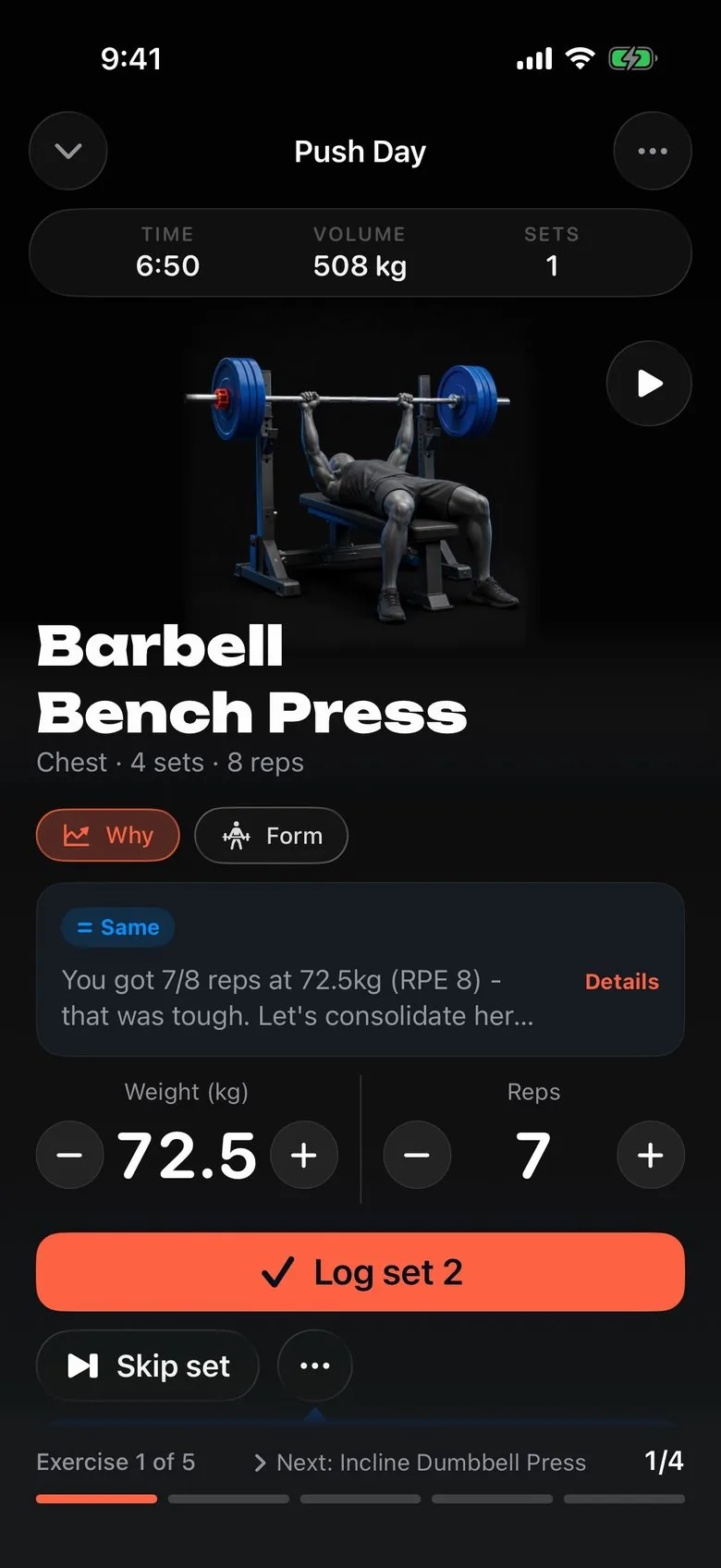
Calls your next set.
Every set arrives pre-filled with the weight and reps to hit next, and the reason why.
Get the appStart with calories before splitting macros
Macros are protein, carbohydrate, and fat. They are useful ways to describe food intake, but their totals still need to fit an overall energy target. Enter a daily calorie goal first. If you do not have one, use the TDEE calculator for an estimate and calibrate it against your own weight trend. Selecting a macro split cannot tell you whether a calorie intake suits your goal.
Then enter your body weight and choose protein and fat factors in grams per kilogram. Switching kg to lb converts body weight; the factors remain grams per kilogram because the calculator handles conversion internally. This prevents a common error: applying a g/kg factor directly to a pounds measurement and accidentally more than doubling the intended target.
The formula is calorie accounting
Protein grams equal body weight in kg multiplied by the protein factor. Fat grams equal body weight in kg multiplied by the fat factor. Protein and carbohydrate each contribute approximately four calories per gram; fat contributes approximately nine. The calculator subtracts protein and fat calories from your daily target, then divides the remainder by four to estimate carbohydrate grams.
For example, 80 kg at 1.8 g/kg protein gives 144 g protein. At 0.8 g/kg fat, it gives 64 g fat. Those contribute 576 calories each, leaving 1,248 calories from a 2,400-calorie target. That remainder corresponds to 312 g carbohydrate. The display rounds values for readability, while the unrounded numbers balance the equation.
| Macro | Example grams | Approximate calories |
|---|---|---|
| Protein | 144 g | 576 kcal |
| Fat | 64 g | 576 kcal |
| Carbohydrate | 312 g | 1,248 kcal |
Choose factors you can actually eat
The default factors are illustrative planning choices, not a personalized nutrition prescription. Protein supports your lifting goal, while fat and carbohydrate help make meals workable and provide energy. There is room for different food preferences within the same calorie target. Someone who enjoys rice and fruit may prefer a different split from someone who likes more nuts, olive oil, and richer meals.
Use the protein calculator to understand a broad training range. Do not keep increasing protein simply because the input permits it. Higher values leave fewer calories for carbohydrate and fat. If you have a relevant medical condition or a clinician-set target, use that individual advice rather than overriding it with this general tool.
Why some inputs return an error
If protein and fat already exceed your calorie target, no nonnegative carbohydrate value can make the plan fit. The calculator reports that conflict instead of hiding it with a zero or a negative carbohydrate result. Increase calories or reduce the selected factors until the plan is mathematically possible. Whether it is a good diet still needs a separate judgment.
A very low intake can also make the remaining foods difficult to distribute. Treat that difficulty as information. It may mean the target is too restrictive, the protein factor is unnecessarily high, or your food choices need more flexibility. An output that fits arithmetic is not proof that it meets every nutritional need.
Build a repeatable day of meals
Choose a few protein foods you enjoy, add carbohydrate around the sessions where you need it, and include fats in meals that make you satisfied. Spread protein across normal eating occasions if that helps. You do not need identical meals or a precise post-workout countdown. Consistent portions are easier to review than a new complicated menu every day.
The guide to protein for muscle growth covers practical food choices. The guide to lean bulk calories shows how to adjust intake when body weight moves faster or slower than intended. Keep those decisions tied to your goal, performance, and recovery rather than treating the calculator's starting split as permanent.
Review the plan without chasing precision
Food labels and portion estimates are approximate. A few grams of rounding will not determine a training outcome. Look for a pattern you can sustain for several weeks, then reassess. If the plan makes social meals impossible or causes persistent hunger and poor training, revise it. The purpose of tracking is to reduce guesswork, not to make eating feel like a test you fail every evening.
Frequently asked questions
Do the macros add up to my calories?
Yes, before display rounding: protein and carbs use 4 kcal/g and fat uses 9 kcal/g. Alcohol, fiber, and food-label rounding can make real labels differ from this simple accounting model.
Why does the calculator reject my targets?
Protein and fat alone can exceed the calorie budget. The tool rejects that combination rather than reporting negative carbs. Adjust the calorie target or the factors.
Can I use pounds?
Yes. Body weight converts to kg internally, and the protein and fat factors stay in g/kg. The result is grams per day regardless of your weight unit.
Keep building your plan
- TDEE Calculator – Maintenance Calories for Lifters
- Protein Calculator – Grams per Day to Build Muscle
- Calories Burned Lifting Weights Calculator: MET Estimate
- Creatine Calculator: Loading and Maintenance
- How Much Protein to Build Muscle?
- Lean Bulk: Calories, Macros and Rate of Gain
- Compare nutrition trackers for your calorie and protein plan
- Choose a repeatable exercise and check the setup