
Strength Standards: Beginner, Intermediate or Advanced?
Find your lift-to-bodyweight ratio and compare it with illustrative landmarks. These editorial estimates are a planning reference, not a population ranking.
Your numbers, your next step.
Slide or enter a value to update the result.
Illustrative strength landmark
1.25× body weight
Intermediate. These are Trainer editorial estimates, not population percentiles, official standards, or safety targets. Enter a tested or estimated one-rep max.
| Editorial landmark | Bodyweight ratio | Lift weight |
|---|---|---|
| Beginner | 0.5× | 40 kg |
| Novice | 0.75× | 60 kg |
| Intermediate | 1.25× | 100 kg |
| Advanced | 1.75× | 140 kg |
Free, no signup. Inputs stay in your browser; they are not sent to Trainer.
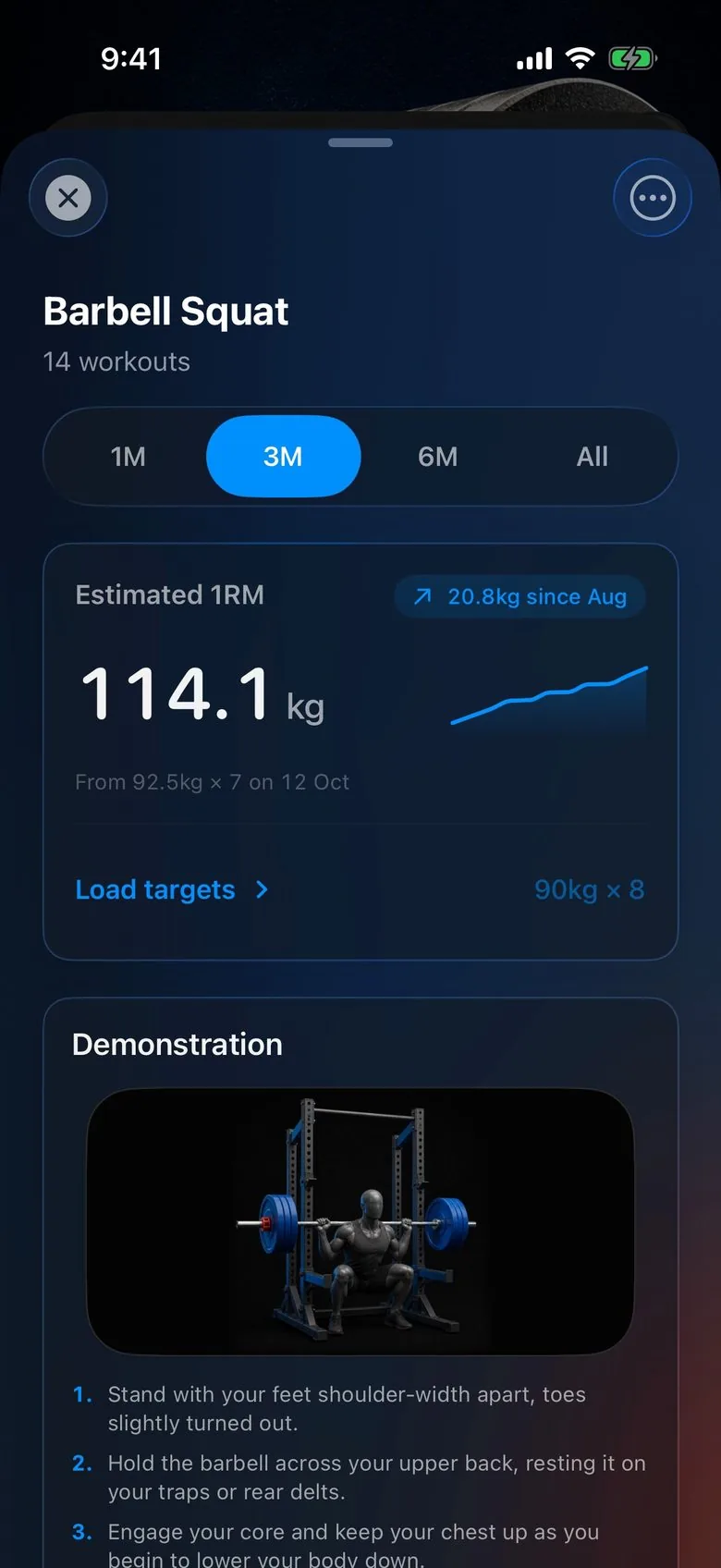
Every lift, tracked.
Trainer works out your estimated max from the sets you log, for every lift, and shows how far it has moved.
Get the appHow strong am I relative to my body weight?
Divide the weight of your tested or estimated maximum by your body weight. A 100 kg bench at 80 kg body weight is a ratio of 1.25. That ratio is easy to track and gives context to the absolute load, but it does not describe every part of strength. Technique, range of motion, equipment, age, training experience, and body proportions all matter.
Enter a single-repetition performance or an estimated one-rep maximum. Do not enter the weight from a ten-rep set as though it were your maximum. If you need to translate a working set first, use the one-rep max calculator and keep the original reps in your notes. A prediction still carries uncertainty.
What these strength standards actually mean
The landmarks on this page are Trainer editorial estimates. They are not percentiles from a surveyed population, official federation standards, qualification thresholds, or evidence that a particular lift is safe. Labels such as Beginner and Intermediate are plain planning language. They do not tell you how many people you are stronger than.
The male and female selectors provide two illustrative sets of ratios. They do not capture every individual circumstance and are not identity categories. You can use the raw ratio without adopting a category label. Your own consistent trend is often the most useful comparison, especially early in training.
| Lift | Male-coefficient Intermediate estimate | Female-coefficient Intermediate estimate |
|---|---|---|
| Bench press | 1.25 × body weight | 0.75 × body weight |
| Squat | 1.75 × body weight | 1.25 × body weight |
| Deadlift | 2.00 × body weight | 1.50 × body weight |
Make comparisons fair enough to be useful
Keep exercise definitions stable. A squat to a consistent depth is different from a progressively shallower squat. A bench with a pause is different from a bounced rep. A deadlift from the floor is different from a high rack pull. All can have a place in training, but comparing them as the same test makes a ratio less informative.
Use similar equipment and conditions where practical. Note whether you used straps, a belt, a different bar, or a different range of motion. The goal is not to erase every difference; it is to avoid letting a hidden difference look like a dramatic strength change. A useful log records the performance, not just a flattering label.
Ratios change when body weight changes
Suppose your bench stays at 100 kg while your body weight drops from 80 to 75 kg. The ratio rises from 1.25 to about 1.33 without a larger lifted load. That may be useful context during a cut, but it is different from adding strength in absolute terms. Look at both numbers before deciding what happened.
Similarly, gaining body weight can temporarily lower a ratio even while the lifted load improves. Do not treat that as automatic failure. Ask whether the change fits your training goal. A sport qualification, a general fitness goal, and a personal bench milestone can require different ways to interpret the same data.
Set your next target from your own starting point
Choose a goal close enough to influence this month's training. If your current bench maximum is 70 kg, a distant ratio category may not tell you what to do next Tuesday. Improving a repeatable set, practicing the lift consistently, and using a manageable progression rule are more actionable.
The lift goal calculator shows how an assumed rate changes a timeline. It is a scenario rather than a forecast. The guides to increasing your squat and increasing your bench show training decisions that a ratio alone cannot supply, including technique practice, load increments, and recovery checks.
Keep labels in their proper role
A strength landmark can make a goal concrete. It should not make a normal session feel inadequate or push you to test a maximum before you are ready. Celebrate clearer technique, more consistent attendance, and repeatable working sets as well as heavier lifts. Use the ratio as one line in the training record, not as a judgment of your ability or worth.
Frequently asked questions
Are these population percentiles?
No. They are editorial bodyweight-ratio landmarks, clearly labeled estimates. The tool does not claim a surveyed ranking or an official qualification standard.
Can I enter a working-set weight?
Convert a hard working set to an estimated maximum first, or use a tested single. A raw ten-rep load is not directly comparable with these one-rep landmarks.
Should I test a max to get a better label?
No label requires a max attempt. A consistent training trend is more useful than forcing a test without appropriate readiness, technique, and safety setup.