
Progressive Overload: The Beginner's Guide
More reps. A little more weight. Learn when to make the next move.
By Avia, Trainer founder · Updated October 19, 2026
Good training starts with understanding. Practical guides for every next step.
More reps. A little more weight. Learn when to make the next move.
By Avia, Trainer founder · Updated October 19, 2026

Two simple sessions. Three days a week. A clear place to begin.

Put a useful number on how hard that last set felt.

Choose a swap by the movement you need and the equipment you have.
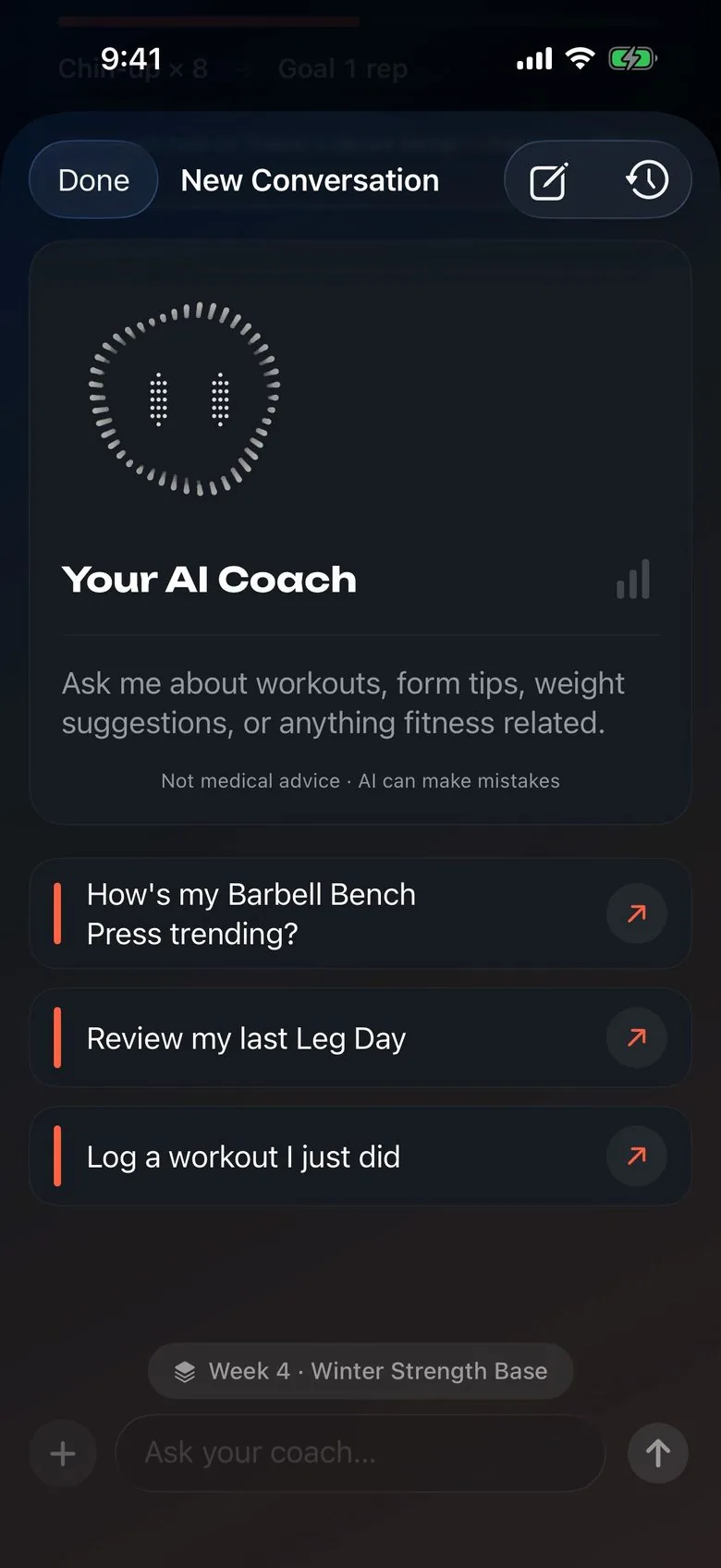
What useful coaching needs to know, and what to verify.
All 73 guides
More reps. A little more weight. Learn when to make the next move.
Two simple sessions. Three days a week. A clear place to begin.
Find a split that fits the days you can actually train.
Count the work that matters, then adjust from your recovery.
Put a useful number on how hard that last set felt.
Understand your estimated max without testing it today.
Turn a daily protein target into meals you can repeat.
Build a starting surplus, then let the longer trend guide you.
Make room for fat loss while keeping training productive.
Recognize a fatigue pattern and plan a lighter week with purpose.
Better practice, smaller jumps, and a consistent standard.
What useful coaching needs to know, and what to verify.
Keep your sets, rest, and workout record close at hand.
Look beyond the scale when fat loss and muscle gain overlap.
Give each of your four weekly sessions a clear job.
Build your plan around six useful movement patterns.
Use calorie and training trends to make measured adjustments.
Start with a manageable session before adding more work.
Make protein timing fit your day, without a countdown.
Choose a swap by the movement you need and the equipment you have.
Find a useful back exercise when the machine is taken.
Choose a manageable first week and learn what useful strength practice looks like.
A first-session walkthrough, from arriving to recording your working sets.
Ask about equipment, share space, and finish your session with less uncertainty.
Make your first visit smaller, clearer, and easier to repeat.
Budget your sets, rest, and warm-ups around the time you actually have.
Understand what changes when size or a specific lift is the priority.
Rest long enough to make the next planned set useful.
Follow eight worked weeks, including repeated loads when a target is missed.
Put one plate per side in context and plan the next earned increase.
Give several weeks of training one purpose and a clear review point.
Compare published generation, editing, and Watch features with your training needs.
Keep your original archive and inspect the import before changing your routine.
Separate free logging, social accountability, and paid planning.
Choose consistent measures and turn your workout record into a useful next decision.
Test your starting height, then earn each lower rung down to the floor.
Weekly plans for 5, 10, 15 and 20 reps, with regular retests.
A daily total based on your max, and what 100 a day really does.
Find a comfortable depth, then climb from bench dips to full and ring dips.
Learn to bail, build the line on the wall, then balance freestanding.
Hangs, rows, negatives and assisted reps, with a test for each step.
Go from one strict rep to ten with ladders and a weekly template.
What one, five and ten pull-ups mean, and how to reach the next level.
What changes with your grip, what the muscle studies show, and which to train.
The prerequisites, the bar progression and the ring version, step by step.
Tuck to full lever, with hold times, pulling drills and exit rules.
Depth, knee travel and the fixes for lifting heels or caving knees.
Daily and weekly squat totals by level, and what a 30-day challenge does.
Box pistols, assisted reps and negatives on the way to a full pistol.
Set up a straight line, then train short, perfect holds that grow.
The gymnastics base position, from a tucked hold to a full hold.
Support hold, tuck, one leg, full: hold times and compression drills.
Three full-body sessions a week for 12 weeks, with a level for every exercise.
What the studies show for muscle and strength, and how to combine both.
What the Army actually trains and tests, and a four-week plan to follow.
Put your arm behind you, and know what that can and cannot do.
Arm in front, palm up: the curls that favor the short head.
Hammer, reverse and preacher curls for the muscle under your biceps.
Every curl compared by where it is hardest. Pick two and progress them.
What shapes a biceps peak, and what training can still change.
Build your arms with a pair of dumbbells, at home or in the gym.
One vertical pull, one elbow-to-hip row, and the cues that help.
Reverse flyes, face pulls and rows for the back of your shoulders.
Elbows-out rows and prone raises for the rhomboids and mid traps.
Rows, pullovers and hinges when dumbbells are all you have.
Train your erectors safely, and know when to see a clinician first.
A full back workout with bands, anchored safely and taken hard.
Moderate inclines, honest bench-angle data and a full session.
Why your flat press already counts, and when decline work helps.
There is no inner chest muscle. Here is what fills out the middle.
Presses, flyes and floor presses, with or without a bench.
Choose a swap by why you are replacing the bench.
Banded push-ups, presses and flyes that still build your chest.
Your first push-up, pull-up and pistol squat, and a 12-week plan that puts them together. No gym needed.
Start with bodyweight training
Find a first-week guide for your starting point, work schedule, family, or budget.
Find a guide for your situation
Start with a plan. Learn how to progress it. Keep a record of what actually happened.