
Navy Body Fat Calculator – Tape-Measure Method
Use height and consistent tape measurements to estimate adult body fat. This historical circumference model is a rough reference, not a diagnosis or a military eligibility test.
Your numbers, your next step.
Slide or enter a value to update the result.
Historical Navy circumference estimate
17% body fat
A tape-based adult estimate, not a diagnosis or a current military eligibility assessment. Repeat consistent measurements; do not use small changes as evidence of fat loss.
Free, no signup. Inputs stay in your browser; they are not sent to Trainer.
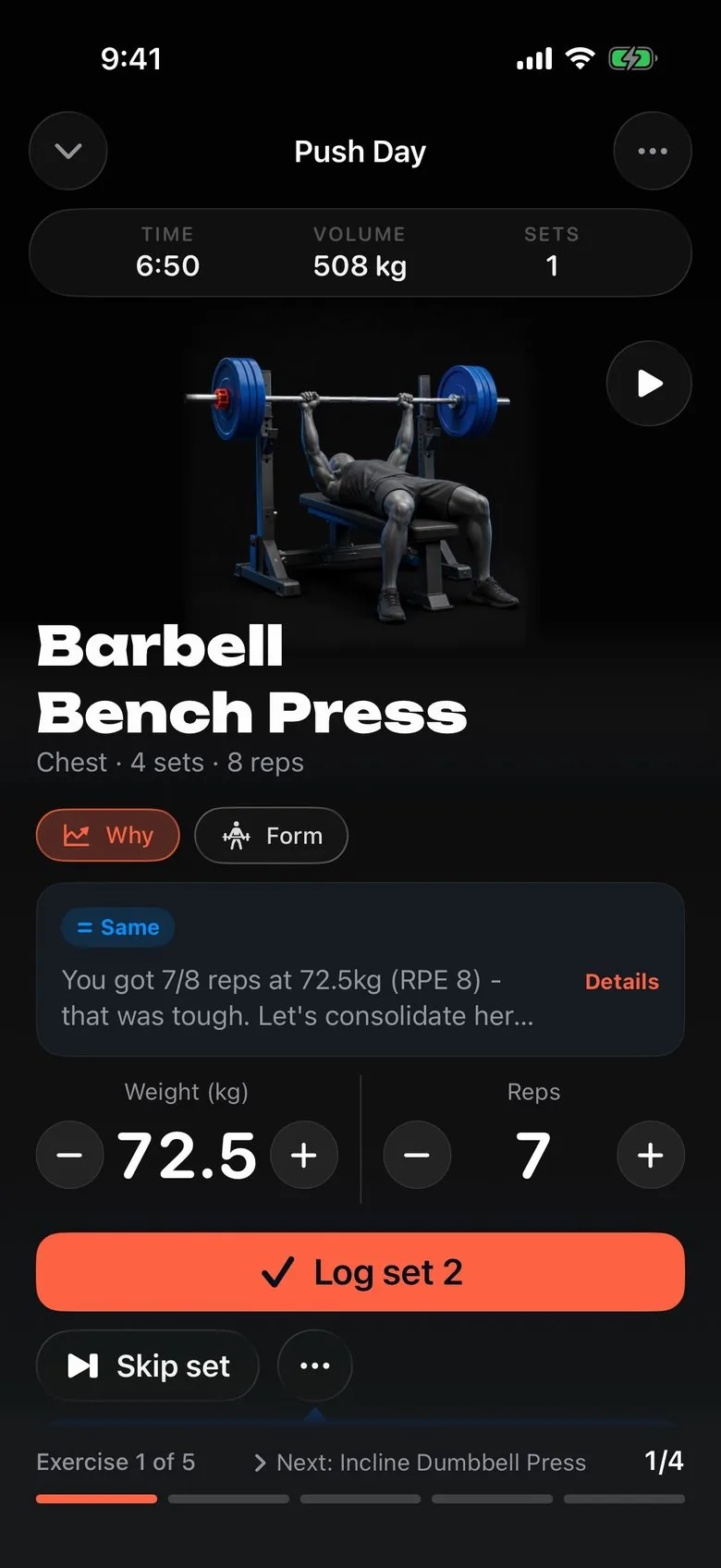
Calls your next set.
Every set arrives pre-filled with the weight and reps to hit next, and the reason why.
Get the appWhat this body fat calculator can estimate
The historical US Navy circumference method estimates body fat from height and tape measurements. The male equation uses abdomen and neck measurements. The female equation also uses hips. These equations were developed for specific military populations, so they are not a direct measurement of your body composition or a guarantee of individual accuracy.
This page uses the widely circulated logarithmic circumference formulas associated with the historical method. It does not assess current Navy service requirements or reproduce a current official military screening process. A number on this page cannot determine medical health, readiness to train, or eligibility for a job or competition.
Take consistent measurements
Stand comfortably and keep the tape level without pulling it tight enough to compress the skin. For the male equation, measure the abdomen around the navel. For the female equation, use the natural waist and the widest part of the hips. Measure the neck below the larynx with a consistent position. Measure height without shoes.
Take more than one reading and repeat your procedure on future measurement days. A different tape angle or a tighter pull can change the estimate without a meaningful body-composition change. Record the original circumferences as well as the percentage. They make a trend easier to interpret than a number whose inputs were forgotten.
The formulas use inches internally
All tape inputs are converted to inches before applying the logarithmic equations. The male formula is 86.010 times log10 of abdomen minus neck, minus 70.041 times log10 of height, plus 36.76. The female formula is 163.205 times log10 of waist plus hips minus neck, minus 97.684 times log10 of height, minus 78.387.
Those constants are not compatible with inserting cm directly. Metric inputs are divided by 2.54 first. The unit toggle changes every relevant measurement together, so you cannot accidentally mix a height in cm with a neck in inches. The kg/lb unit selector here also controls cm/in; body weight is not an input to this circumference method.
| Measurement | Male equation | Female equation |
|---|---|---|
| Height | Required | Required |
| Neck | Required | Required |
| Abdomen or waist | Abdomen at navel | Natural waist |
| Hips | Not used | Widest circumference |
Interpret the percentage carefully
The result is a model estimate from your measurements. It is not equivalent to a scan, underwater weighing, or a clinical assessment. Different methods can produce different percentages for the same person. Do not try to combine them into a precise daily score or assume that a small change on this page proves fat loss.
The tool rejects an impossible logarithm input, such as an abdomen no larger than the neck for the male equation. It also rejects results outside a broad plausibility range rather than silently clipping them to a flattering number. An error is a prompt to check the measurements, not evidence that a body is wrong or abnormal.
Use trends without letting them dominate training
Choose a consistent measurement routine and review changes over a longer period alongside body weight, performance, and how your clothes fit. Daily tape measurements can invite noise into a decision that does not need daily precision. If your goal is general strength, your next workout usually depends more on recent training than on a body-fat estimate.
For a food-planning starting point, use the TDEE calculator and calibrate it with your own observations. The protein calculator helps organize meals without requiring a body-fat estimate. The guide to cutting without losing muscle explains how to preserve productive training during a deficit.
Keep the decision proportionate to the evidence
A circumference estimate should not trigger an extreme diet or a sudden increase in training volume. The guide to lean bulk calories shows why modest, repeatable adjustments are easier to assess. If body-composition tracking becomes distressing, or you need a medical assessment, step away from the calculator and seek individual support. A helpful measurement reduces confusion; it should not become a daily judgment that overrides energy, recovery, or wellbeing.
Frequently asked questions
Is this a medical measurement?
No. It is a historical adult circumference estimate. It cannot diagnose health, replace a clinical assessment, or establish current military eligibility.
Why are the units important?
The displayed logarithmic constants expect inches. The tool converts cm to inches internally; entering cm directly into those formulas would give an incorrect result.
Why did my estimate change overnight?
Tape placement, tension, hydration, and ordinary variation can change inputs. Repeat consistent measurements and look at longer trends rather than interpreting a small one-day change as fat loss.
Keep building your plan
- TDEE Calculator – Maintenance Calories for Lifters
- Protein Calculator – Grams per Day to Build Muscle
- Lean Body Mass Calculator: Boer, James and Hume
- How to Cut Without Losing Muscle
- Lean Bulk: Calories, Macros and Rate of Gain
- Compare nutrition trackers for your calorie and protein plan
- Choose a repeatable exercise and check the setup