
 Video
Overhead Press
Learn how to do overhead press with a clear setup, controlled movement, and a technique you can repeat.
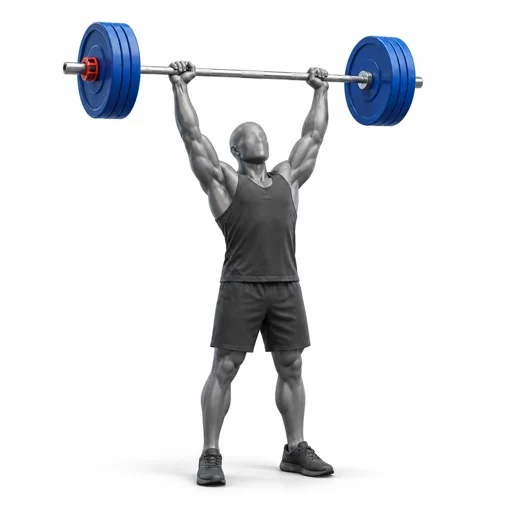
Silent movement demonstration. Use the step-by-step instructions below for the setup and technique.
How to do overhead press
- Stand with your feet shoulder-width apart and hold the barbell with an overhand grip, slightly wider than shoulder-width.
- Lift the barbell to shoulder height, keeping your elbows slightly in front of the bar.
- Press the barbell overhead, extending your arms fully.
- Lower the barbell back to shoulder height and repeat for the desired number of repetitions.
Overhead Press: muscles worked
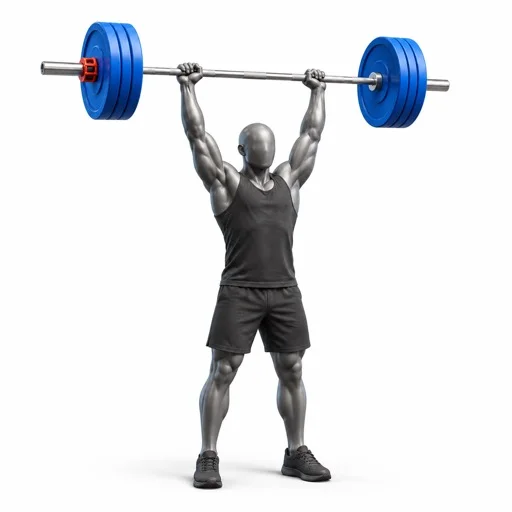
Primary focus: shoulders. Supporting muscles: Triceps.
Better reps before more weight.
Start with a version you can control. Record the same setup and range each time. Add reps or a small load increase when you can repeat the movement without changing the technique.
Plan your next setSet up a repeatable overhead press
For a standing barbell press, use rack hooks that let you take the bar into a comfortable upper-chest position without an awkward pickup. Keep the grip secure and the bar supported over the hands. Brace the trunk and keep a stable stance. Clear enough room overhead before beginning.
Press upward in a controlled path. Move your head out of the bar's way rather than pushing the bar far forward around your face. Finish with the load balanced over your support and lower smoothly to the starting position. The exact grip and comfortable range vary; do not force one written cue through a painful position.
For dumbbells, start from a stable seated or standing setup and press through a comfortable arm path. A seated dumbbell press is a different variation from a standing barbell press. Record them separately so the history stays meaningful.
Shoulder press muscles worked
The shoulder muscles and triceps contribute to pressing the load overhead. The trunk and upper back help stabilize the task. That does not make every shoulder exercise redundant: a lateral raise and a controlled rear-delt movement can have different roles in a balanced week.
Use the shoulder workout hub to choose supporting work and the triceps hub to account for direct arm work. Chest pressing already adds pressing volume, so do not increase all of these exercises together because one session felt easy.
A beginner working dose
After lighter preparation, try two working sets of six to ten controlled reps as a starting example. Leave roughly two repetitions available rather than testing an unstable maximum. Rest long enough that breathing and setup do not force the next set into a different movement.
If the empty bar is too heavy for the intended range, a lighter training bar, dumbbell variation, or compatible machine can make practice manageable. There is no requirement to start with a full-size bar. A smaller tool that lets you repeat the task is useful training.
How to progress the overhead press
Build reps within the selected range before increasing load. Presses often have smaller feasible increments than lower-body lifts. If the smallest barbell increase repeatedly makes you miss the bottom target, use fractional plates when appropriate or repeat the current load. More lean is not proof that the pressing muscles got stronger.
The plate calculator helps load a feasible bar, and the progression guide explains when an increase is justified. A calculator cannot judge whether your shoulder position or the day's recovery supports that target.
Common mistakes
- Finishing the press with an increasing backward lean.
- Letting the bar drift far forward to get around the face.
- Changing from strict pressing to leg-driven push pressing without recording a different variation.
- Adding direct shoulder work without accounting for the week's bench and incline presses.
The StrongLifts overhead-press resource provides a specialist barbell reference. This guide is an original practical checklist, not a claim that text alone can evaluate an individual's lift.
Keep the next set editable
Log the actual load, reps, and optional effort in Trainer. Inspect the next suggestion and adjust when the equipment, range, or session conditions differ. Include the press in a push session or an upper/lower week rather than adding a separate hard pressing day to every available gap.
Frequently asked questions
How do you do overhead press?
Stand with your feet shoulder-width apart and hold the barbell with an overhand grip, slightly wider than shoulder-width. Lift the barbell to shoulder height, keeping your elbows slightly in front of the bar. Press the barbell overhead, extending your arms fully.
What muscles does overhead press work?
Overhead Press primarily trains the shoulders, with the triceps contributing. The exact demand depends on your setup, range, and chosen load.
What is the best technique for overhead press?
Set stable contact points and a secure grip before pressing. Control the lowering phase and press through a comfortable, repeatable path. Use suitable rack safeties or assistance for heavy barbell work; avoid sudden changes in position.
What can I do instead of overhead press?
Related options include Barbell Shoulder Press, Landmine Press, Barbell Incline Shoulder Raise. These can have different equipment, range, and movement demands. Open the guides below to compare the setups before choosing a replacement.
Related shoulders exercises
6 ways to move.
Find the one that fits.
Showing 1–6 of 6 exercises
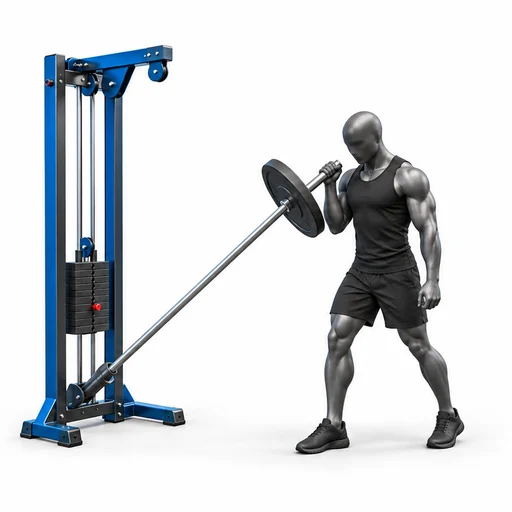
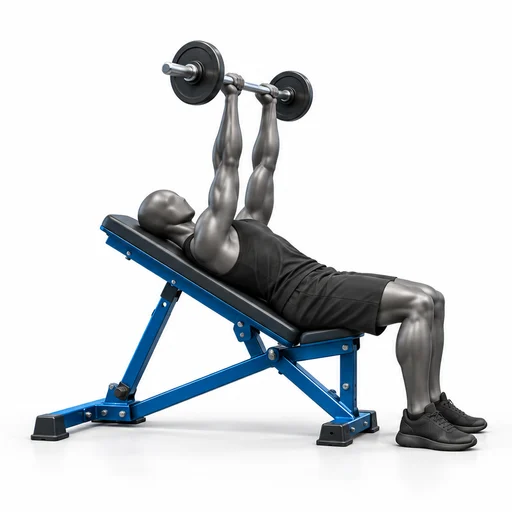
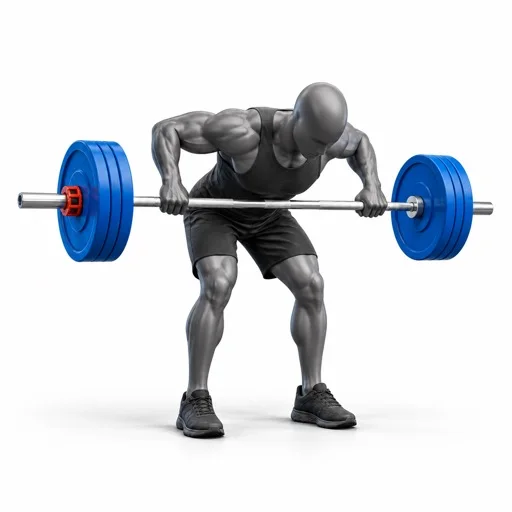
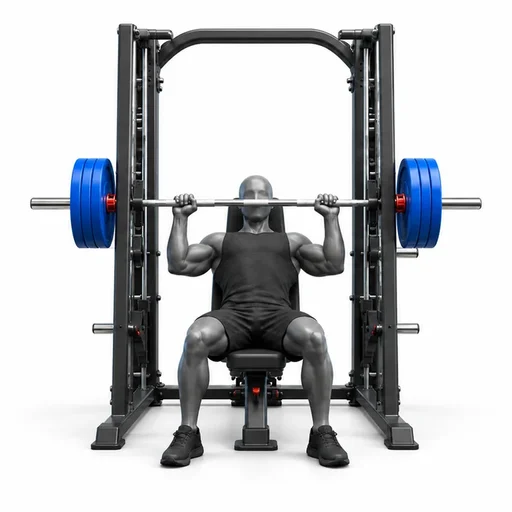
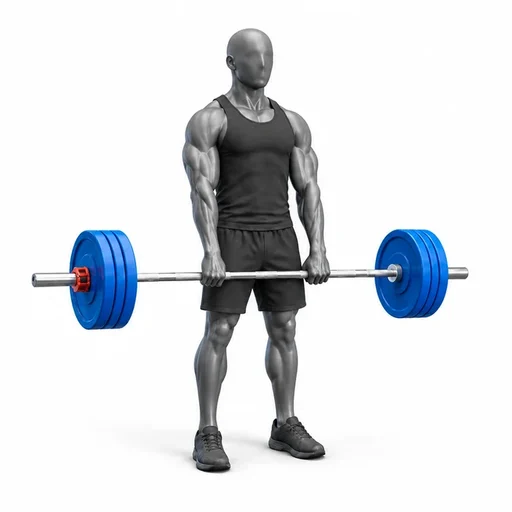
Compare related movement setups
Browse the directory pages containing overhead press and the related movements above to compare equipment and technique choices.
Your body. Your next move. Preparing the interactive view…
Explore another muscle.
Choose a muscle on the body or below. Discover the movement, see the technique, then make it yours.
Browse every exercise