
135 Bench Press: How Strong Is One Plate?
A 135 lb bench press is a 45 lb bar with one 45 lb plate on each side, and it can be a meaningful first strength milestone. How strong it is depends on body size, training history, technique, and whether you mean one rep or several; there is no reliable population percentage to assign here.
In this guide
What does a 135 bench press actually mean?
In the usual US gym shorthand, 135 means pounds, including the bar. A standard 45 lb bar plus two 45 lb plates totals 135 lb: 45 + 45 + 45. That is about 61.2 kg. A 20 kg bar plus one 20 kg plate per side totals 60 kg, about 132.3 lb, so the familiar metric one-plate bench is close but not identical.
Check the actual bar and plates in your gym. A lighter technique bar, a different bar specification, or a Smith machine changes the arithmetic and the task. Write the equipment in your log rather than assuming every long bar weighs 45 lb. Machine resistance cannot be converted into a free-weight bench result simply by comparing the printed number.
| Loading example | Total | What to record |
|---|---|---|
| 45 lb bar + 45 lb each side | 135 lb | Standard US one-plate bench |
| 20 kg bar + 20 kg each side | 60 kg | Metric one-plate bench |
| 45 lb bar + 25 and 10 lb each side | 115 lb | An earlier loading step |
| 45 lb bar + 45 and 2.5 lb each side | 140 lb | A 5 lb total increase from 135 |
The plate calculator can check a target total before you load. Always count both sides and the bar, and use compatible matched plates. Correct arithmetic is a separate requirement from choosing a weight you can lift safely.
Is benching 135 pounds good?
It can be good progress for you. Someone starting with a light training bar has a different path from someone arriving with years of pressing practice. Body size, age, sex, limb lengths, prior sport, and the exact movement standard all affect the comparison. A useful milestone does not need a claim that it makes you better than most people.
The more informative comparison is your own earlier controlled performance. If you used to bench 95 lb for five reps and now bench 115 for five with the same setup and range of motion, you have improved before reaching 135. Chasing the recognizable plate should not make those intermediate steps disappear.
The bench strength standards offer benchmark context with sample limitations. They do not represent a random survey of every adult and should not prescribe your next training weight. Use a benchmark as background, then choose the next attempt from actual completed work.
What percentage of people can bench 135?
A defensible population percentage would need representative testing and a clear definition of the lift. Public lifting databases often contain people who choose to record their performance, which differs from the general population. Internet polls have the same selection problem and may not define a paused, full-range, unassisted repetition.
There is no verified population estimate used in this guide. Avoid converting a community percentile into a claim about all men, all women, or all adults. The honest answer is that the available comparison does not establish that percentage.
Is 135 for one rep the same as 135 for five?
No. Repeating 135 for five controlled reps generally indicates a different level of performance from lifting it once. The exact relationship varies by person, effort, and technique. Record the rep count and any assistance rather than using the bar weight alone as the entire result.
The bench press calculator estimates a maximum from a completed set. Treat that as an estimate, especially when reps are high or the effort was far from your limit. An estimated 135 lb maximum does not establish that you are ready to attempt 135 today.
For example, 115 lb for five reps gives an Epley estimate of about 134.2 lb: 115 × (1 + 5/30). That is close to the milestone mathematically, but the formula does not know whether you can unrack 135 steadily, pause the rep, or use appropriate safety equipment. A prediction is information for planning, not an instruction to test.
How do you train toward your first 135 bench?
Use a repeatable press variation and a manageable weekly schedule. Two bench exposures can offer practice without requiring every visit to be a heavy attempt. A beginner full-body plan can place bench on one day and another comfortable press on the alternate day; the precise frequency should fit recovery and the rest of the program.
Start with a load that lets you complete controlled sets while leaving a few clean reps available. You do not have to begin at a percentage of 135, because the goal does not describe your present ability. Someone who can comfortably press 75 lb and someone who can press 115 should not receive identical starting targets.
The beginner three-day plan provides a broader routine so the pursuit of one lift does not remove lower-body and pulling work. Keep the pressing dose small enough to repeat. Extra daily attempts can make the goal feel urgent without making the training more effective.
What progression rule should you use?
One practical option is three working sets in a six-to-eight range. Keep the same load while building controlled reps. Once all three sets reach eight with your chosen technique and reserve, add the smallest suitable load and build again from the lower end. This is an example, not the only valid scheme.
| Illustrative result | Next decision | Why |
|---|---|---|
| 95 lb: 8, 7, 6 | Repeat 95 lb | Later sets have room to improve |
| 95 lb: 8, 8, 8, controlled | Consider 100 lb | All sets meet the condition |
| 100 lb: 6, 6, 6 | Keep building reps | New load is within the range |
| 100 lb: 6, 4, 3 | Review load, rest, and effort | The intended task was not sustained |
These rows illustrate decisions, not consecutive sessions you are promised to achieve. A repeat can last several exposures. If the gym's smallest jump is too large, smaller change plates or a wider rep range may fit better. The progressive overload guide explains how to keep the rule tied to completed sets.
What technique details should remain consistent?
Choose a stable bench setup, plant your feet securely, and use a grip you can control. Keep your upper back supported and your wrists positioned so you can manage the bar. Lower to a consistent comfortable touch point, then press without relying on a bounce or a spotter lifting the bar for you.
The goal is repeatability, not copying a stranger's exact arch or grip width. Limb lengths and comfort differ. Ask a qualified coach to check your movement if setup feels unfamiliar. If a particular technique causes pain, do not force it because a milestone chart implies the rep must happen today.
Set rack safeties appropriately where available, or use a competent spotter who understands the plan. Practice an empty-bar unrack before heavier work. Never use an unfamiliar solo maximum attempt as the way to find out whether your safety arrangement works.
When should you attempt the milestone?
You do not have to test a single at all. Building to controlled repetitions at 135 is a valid route. If you choose a single attempt, use recent training, familiar equipment, adequate recovery, and a proper spotter or safeties to decide whether it is reasonable. The plate's appearance is not evidence of readiness.
Warm up gradually without turning the preparation into a fatigue test. The warm-up calculator can illustrate load steps, but adjust them to your actual working history and available plates. A lighter prior set that unexpectedly feels difficult is useful evidence to postpone the attempt.
Stop the attempt if you lose control or develop pain. A missed milestone does not erase the training that preceded it. Record the result accurately, return to a manageable target, and review what differed before choosing another test day.
How long will it take to bench 135?
There is no honest universal timeline. Your starting strength, consistency, loading increments, recovery, and technique all matter. An eight-week spreadsheet can show the arithmetic of adding five pounds, but it cannot prove that your body will support every increase on schedule.
Track the smaller signals: more reps at the same load, better control, and a previously difficult set becoming repeatable. The increase-bench guide explains how to review practice and supporting work when progress slows. Trainer records completed sets and offers editable history-based targets, which can help make those changes visible without promising a deadline.
For your next session, choose a weight supported by your recent log and write the exact condition for increasing it. The first useful step toward 135 is a controlled task you can complete now, followed by an honest record of what happened.
Frequently asked questions
Is a 135 bench one plate?
On a 45 lb bar, one 45 lb plate on each side totals 135 lb. A 20 kg bar with 20 kg plates totals 60 kg, which is about 132.3 lb.
How many people can bench 135?
This guide has no verified representative population estimate. Self-selected lifting databases and online polls cannot establish the percentage of all adults who can do it.
How long does it take to bench 135?
There is no universal timeline. Use your starting performance, consistent training, feasible load increments, and recovery to guide the next step.
Should I test a maximum to see whether I can do it?
Testing is optional. You can build toward controlled working sets instead. Any single attempt should use familiar equipment and suitable safeties or a competent spotter.
Try the numbers for yourself.
Bench press
Estimate your max and compare your lift-to-bodyweight ratio.
Plate loading
See exactly which plates belong on each side of the bar.
Warm-up sets
Build a simple ramp toward your working weight.
A useful next read.
All guides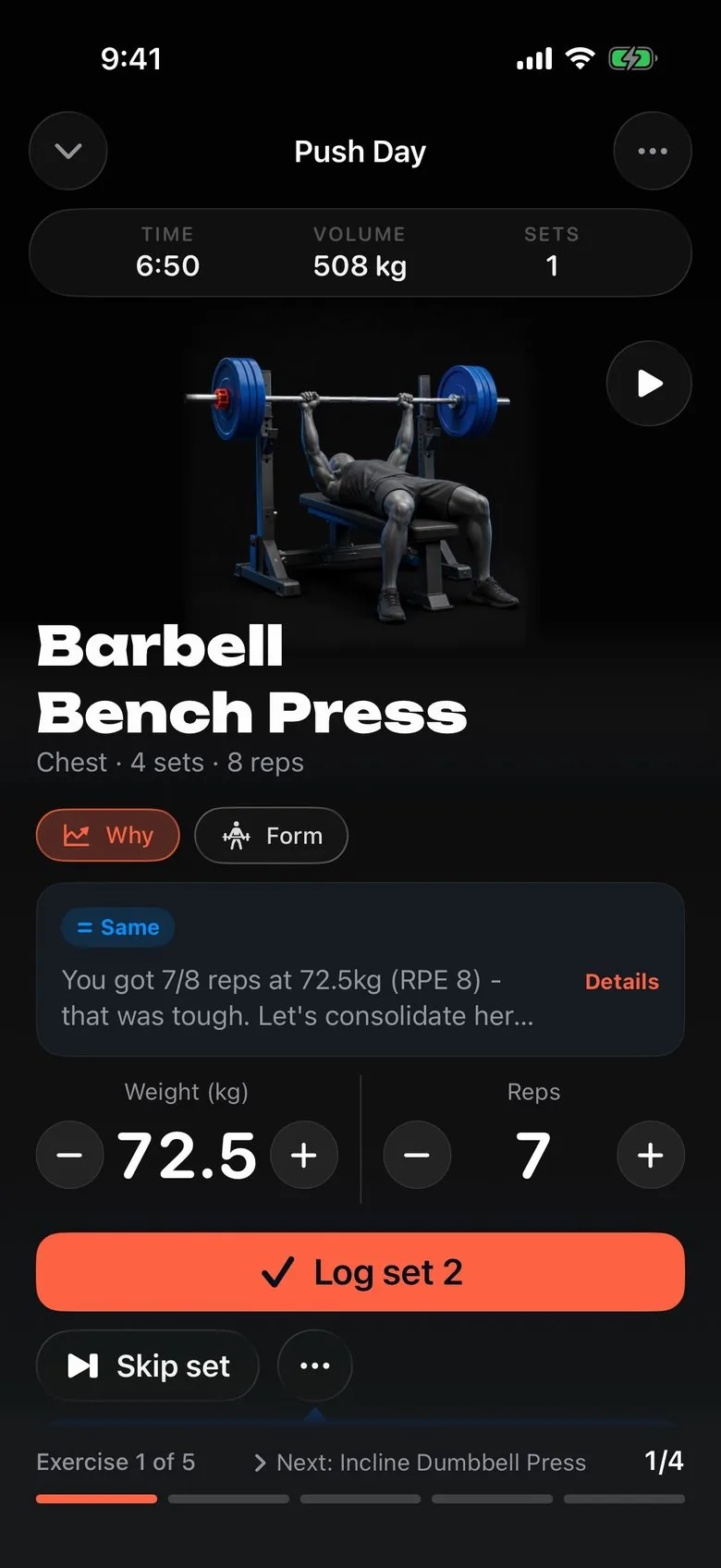
How to Increase Your Bench Press (and Hit 225)
Better practice, smaller jumps, and a consistent standard.
Progressive Overload: The Beginner's Guide
More reps. A little more weight. Learn when to make the next move.

Beginner Workout Plan: 3-Day Full Body
Two simple sessions. Three days a week. A clear place to begin.